
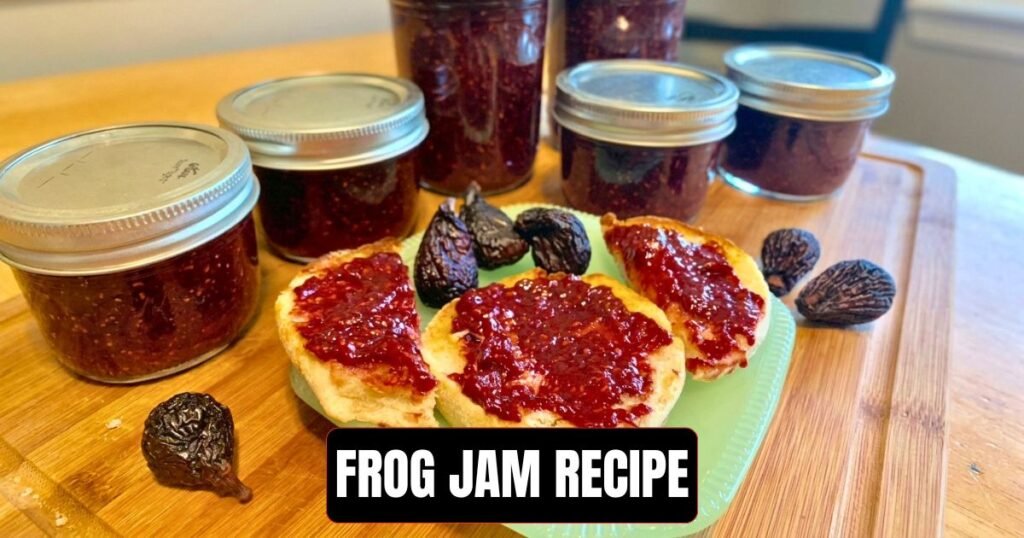
Frog Jam Recipe fills the kitchen with the sweet smell of cooking fruit. It’s comforting to stir a pot while thinking of summer days. Homemade jam often reminds us of family kitchens, full fruit baskets, and warm toast with fresh jam. This simple tradition lets us enjoy ripe fruit long after the season ends.
Frog Jam is a favorite in many homes. Its unusual name hides a special flavor made from figs, raspberries, oranges, and ginger. This jam is sweet, with some citrus and a hint of ginger warmth. Each spoonful tastes fresh and bright, making it perfect on biscuits, toast, yogurt, or even straight from the jar.
You don’t need special tools, complex canning skills, or hard-to-find ingredients. With fresh fruit, sugar, lemon juice, and some time on the stove, you can create a rich, homemade jam that tastes better than store-bought. This easy Frog Jam is a rewarding treat to make from the first stir to the last spoonful.
The Story Behind Frog Jam: Name, Origins, and Meaning
No frogs are harmed in making this jam. The name “Frog Jam” is an acronym for its four main ingredients: Figs, Raspberries, Oranges, and Ginger. These ingredients give the jam its bold flavor. Once you know this, the name makes sense, and it’s easy to remember the ingredients.
Frog Jam fits into tradition by using a mix of seasonal and pantry ingredients to create something special without waste. Over time, this jam made its way into home kitchens across America. Food bloggers, farmers’ market vendors, and home canners shared it with others.
Today, people love Frog Jam for its unique, fruity, citrusy taste, its beautiful deep color, and its versatility with both sweet and savory dishes. My version keeps those traditions while making the process easy enough for anyone to enjoy on a weekend afternoon.
What to Expect in Every Frog Jam Jar
Frog Jam has a unique flavor that is hard to describe in just one word. The figs provide a deep sweetness with a hint of earthiness. The raspberries add a bright tartness and lively berry flavor. The orange zest and juice bring a fresh citrus note that ties everything together. Ginger adds warmth and a little heat at the end, balancing the sweetness without overpowering it.
The texture of the jam depends on how you cook and finish it. If you leave it chunky, you’ll have satisfying bits of fig and raspberry. If you use an immersion blender for a minute, it gets smoother and more spreadable, like store-bought jam. Most people prefer a texture that is firm enough to hold its shape on toast but soft enough to spread easily.
You can control the final texture, which is one of the best parts of making this jam at home.

The Traditional History of This Homemade Jam
Frog Jam is associated with Amish cooking, but it’s hard to find a single original recipe. Many food historians believe it started in Amish communities in Pennsylvania and the Midwest, where preserving seasonal fruit is important. Amish families often make dozens of jars each fall, using combinations like figs, raspberries, and citrus. In these households, nothing goes to waste.
Overripe figs, late-season raspberries, and citrus from the pantry would all go into a simmering jam pot. They often add ginger, a common spice in Amish baking, to enhance the flavor. The traditional Amish method cooks the jam slowly without commercial pectin, relying on the natural pectin in the figs and raspberries.
Modern recipes, including my frog jam recipe, sometimes use powdered pectin and higher heat to speed up the process. This results in a similar flavor but is faster and more consistent. Whether you choose the traditional method or the modern version, the key remains the same: ripe fruit, simple ingredients, and a little patience while cooking.
Ingredients for My Frog Jam Recipe
Fresh Figs (2 cups, stemmed and chopped): Figs are the main ingredient in this jam. They add natural sweetness and a soft texture, helping the jam thicken with less pectin. Fresh figs are best, but you can use thawed frozen figs or rehydrated dried figs. Choose Black Mission or Brown Turkey figs for the best flavor. Overripe figs are also good since they break down easily and add more sweetness.
Fresh Raspberries (1 cup): Raspberries add bright color, tartness, and a loose texture that makes the jam easy to spread. They are high in natural pectin, which helps the jam set. You can use frozen raspberries without thawing. If you can’t get raspberries, strawberries can be a substitute, but the jam will be sweeter.
Oranges (1 large): Use both the zest and juice of the orange. The zest adds a bright flavor, and the juice gives acidity for better taste and preservation. Zest your orange first to make it easier. If you don’t have a fresh orange, two tablespoons of orange marmalade will work. Just reduce the sugar a bit since marmalade is sweet.
Fresh Ginger (1 tablespoon, peeled and grated): Fresh ginger adds warmth and a mild spice that balances the sweetness of figs and tartness of raspberries. It enhances flavor without being too strong. Use the back of a spoon to peel ginger before grating it. If necessary, you can substitute with 1 teaspoon of ground ginger or try cinnamon or cardamom for a different taste.
Granulated Sugar (2 cups): Sugar is crucial for making shelf-stable jam. It helps the jam set, preserves the fruit, and creates a safe canning environment. Reducing sugar can affect these results. You can replace about 1.5 cups of sugar with honey, but the texture and taste will change.
Pectin (1 packet of powdered pectin, optional): You don’t need pectin because figs and raspberries provide natural pectin. If you want firmer jam, adding pectin can speed up the process and make it more reliable. If you’re new to making jam, using pectin is a good idea. Add the powdered pectin to the fruit before heating.
Lemon Juice (2 tablespoons): Lemon juice adds acidity to brighten the flavor and helps the jam set properly. It also lowers the pH for safer canning. You can use bottled lemon juice, which is often better because it has a consistent acidity level.
Essential Tools and Equipment
- Use a heavy-bottomed stockpot to avoid burning the bottom.
- Candy thermometer to check that the temperature reaches 220°F.
- Canning jars with lids and bands; half-pint jars work best.
- Jar lifter for safely handling hot jars.
- Jam funnel to keep jar edges clean.
- Ladle for filling jars neatly.
- Immersion blender (optional) for a smoother texture.
- Large spoon or silicone spatula for stirring.
Step-by-Step Instructions to Make Frog Jam
1. Prepare the Fruit: Remove stems and chop figs into half-inch pieces. Measure out raspberries, zest the orange, juice the orange, and grate fresh ginger. This preparation helps the cooking process go smoothly.

2. Mix and Rest (Optional): In a stockpot, combine figs, raspberries, orange zest, orange juice, ginger, and sugar. Stir to coat the fruit. You can cook right away, or let it sit, covered, in the fridge overnight to enhance the flavor.

3. Cook on High Heat: Bring the mixture to a boil, stirring often. If you are using powdered pectin, add it before heating. Boil for 20 to 30 minutes, stirring constantly, until the jam thickens and changes color.
4. Check the Set: The jam is ready when it reaches 220°F. At higher altitudes, the temperature is lowered by 2°F for every 1,000 feet of altitude. If you don’t have a thermometer, use the cold plate method to test for firmness.

5. Remove the Foam: After reaching the set point, skim off any foam with a spoon. Adding butter at the beginning can reduce foam.
6. Fill the Jars: Place clean jars on a flat surface. Use a funnel and ladle to fill the jars, leaving a quarter-inch of space at the top. Wipe the rims before sealing and tighten the lids just until snug.

7. Process or Refrigerate: For immediate use, cool jars to room temperature and refrigerate for up to 3 weeks. For longer storage, process jars in boiling water for 10 minutes. Let them cool undisturbed for 12 to 24 hours. If any lids don’t seal, refrigerate those jars.
Pro Tips for a Perfect Set Every Time
Don’t stir too much while cooking: Stirring constantly can break down the pectin, making the jam runny. Stir occasionally, but let the jam boil on its own.
Make small batches: Large batches take too long to cook and might not set properly. Use four to six half-pint jars for the best results.
If your jam is too runny: You can fix it by recooking. Pour the jam back into the pot. For every 4 cups of jam, add 2 tablespoons of lemon juice and 1 tablespoon of powdered pectin. Boil it for one to two minutes, then test again and re-jar.
Don’t add extra liquid: Adding water will dilute the pectin. The fruit will release enough juice when heated.
Avoid crystallization by not adding sugar too early: If sugar sticks to the pot and doesn’t dissolve before boiling, it can cause crystals. Mix well at the start to dissolve the sugar before boiling.
To keep fruit from floating: Cook the jam at a high temperature. If the jam is too loose, the fruit will rise. Make sure the jam reaches the set point before putting it in jars to keep the fruit evenly distributed as it cools.
Prevent burning by using a heavy-bottomed pot: Thin pots create hot spots that can scorch the jam. Use a heavy pot to spread heat evenly, and stir from the bottom often, especially at the start when there’s not enough liquid.
Creative Variations Worth Trying
Small Batch Frog Jam: Reduce all ingredients by half to make about 2 half-pint jars is great for beginners. A smaller batch cooks faster, is easier to manage, and sets more reliably.
Low-Sugar Version: Replace part of the sugar with honey or monk fruit sweetener. Using about 1.5 cups of honey instead of 2 cups of sugar will make the jam softer and give it a floral taste. If using monk fruit, add an extra packet of pectin to help it set.
No-Pectin Version: Omit the powdered pectin and rely on the natural pectin found in figs and raspberries. Cook it slowly after letting it sit overnight. It will take longer to set, but the flavor is often richer and more traditional.
Spicier Ginger Version: Increase the fresh ginger to two tablespoons for a stronger taste. You can also add a pinch of cayenne pepper for a surprising kick. This version tastes great with sharp cheese on a charcuterie board.
Bourbon Frog Jam: Mix in one to two tablespoons of bourbon just before filling the jars. The alcohol will cook off during canning, so store this version in the fridge instead of processing it in a water bath. The bourbon adds a warm, smoky flavor that complements the figs nicely.
Vanilla or Cardamom Version: Stir in ½ teaspoon vanilla extract or ¼ teaspoon ground cardamom in the last minute of cooking. Either one gives the jam a warmer, dessert-like quality that’s great on yogurt or cake.
Southern-Style Frog Jam: Add a pinch of cinnamon and use muscadine or scuppernong grapes instead of half the raspberries to give the jam a richer, darker flavor that’s very Southern.
Old-Fashioned Traditional Version: Skip the pectin. Use dried figs soaked in orange juice and cook slowly for 45 minutes to an hour. This version is similar to what you’d find in an Amish recipe box and has a complex flavor.
Serving Ideas
The simplest pairings often make the best combinations. Spread FROG jam on a warm buttermilk biscuit for a classic treat. It also tastes great on toasted sourdough, plain English muffins, or buttery scones. The citrus and berry flavors balance the bread’s richness, and the ginger adds warmth.
On a cheese board, brie works well because its creamy texture lets the jam’s flavors shine. Goat cheese pairs nicely, too; its tanginess complements the sweetness. Aged cheddar also pairs well, as its sharpness contrasts with the jam’s fruity sweetness. For a charcuterie board, add some crackers, toasted walnuts, and a small bowl of this jam for a tasty snack.
FROG jam can also be used as a glaze. Brush it over roasted chicken in the last 15 minutes of cooking. The sugars caramelize beautifully, and the ginger adds warmth to the meat. For dessert, use it as a cake filling, spoon it over a tart shell with fresh cream, or mix it into plain yogurt or oatmeal for a quick breakfast boost.
How to Store, Freeze, and Can Your Jam
The store opened food jam in a sealed jar in the refrigerator for up to 3 weeks. Always use a clean spoon to avoid bacteria. If you see mold, smell something off, notice color changes, or find a fizzy texture, throw it away. Unopened jars that haven’t been processed in a water bath canner should also be refrigerated and used within 3 weeks.
For beginners, freezing is a simple option. Cool the jam completely before transferring it to freezer-safe containers, leaving ½ inch of space at the top. It can last up to a year in the freezer. To use, thaw in the refrigerator overnight, then stir well before serving.
This jam is acidic enough for water bath canning (pH below 4.6). Fill jars with a quarter-inch of headspace and process in boiling water for 10 minutes. After processing, let the jars cool for 12 to 24 hours without touching them. Check the seals; if any lid pops or flexes, refrigerate that jar.
To sterilize jars, wash them in hot, soapy water, rinse, and boil for 10 minutes. Keep jars hot when filling and warm lids in hot water (but don’t boil them). Always check jars for spoilage before opening.
Is It Worth Making Yourself?
You can find commercial frog jam, but it’s not common in big grocery stores. Instead, look for it at farmers’ markets, Amish specialty shops, and small producers on sites like Etsy or local websites. Some artisan brands sell frog jam only during certain seasons.
Making frog jam at home is cheaper, depending on seasonal ingredients and where you shop. This cost difference is significant, especially since homemade jam tastes fresher and lets you choose your ingredients.
Homemade frog jam has several benefits: it contains no preservatives or added pectin, and you can adjust the sweetness and spice to your taste. If you want to sell it, check your local rules. Many states let home cooks sell certain products under cottage food laws, so it’s important to know the regulations in your area before selling at farmers’ markets. Making frog jam at home also makes a nice gift.

Frog Jam Recipe
Make this easy Frog Jam recipe at home with figs, raspberries, oranges, and ginger. Sweet, fruity, and better than store-bought!
Ingredients
- 2 cups fresh figs, stemmed and chopped
- 1 cup fresh or frozen raspberries
- 1 large orange (zest and juice)
- 1 tablespoon fresh ginger, peeled and grated
- 2 cups granulated sugar
- 2 tablespoons lemon juice
- 1 packet powdered pectin (optional)
Instructions
- Stem and chop figs, measure raspberries, zest and juice the orange, and grate the ginger.
- Combine all fruit, sugar, orange zest, orange juice, ginger, and lemon juice in a heavy-bottomed pot. Stir to coat. Rest overnight in the refrigerator for best results, or cook immediately.
- Add powdered pectin to the cold mixture if using. Bring to a full rolling boil over high heat, stirring frequently.
- Cook for 20 to 30 minutes, stirring often, until the jam reaches 220°F on a candy thermometer or passes the cold plate test.
- Remove from heat and skim foam from the surface.
- Ladle into sterilized half-pint jars, leaving a quarter inch of headspace. Wipe rims clean and seal fingertip-tight.
- Refrigerate immediately for up to 3 weeks, or process in a boiling water bath for 10 minutes for shelf-stable storage.
Nutrition Information:
Yield: 24 Serving Size: 1Amount Per Serving: Calories: 52
This Frog Jam Recipe is worth from scratch because no store-bought version can match the flavor of fresh figs, raspberries, orange, and ginger cooked down together in your own pot. You get to control the texture and enjoy the satisfaction of sealing a jar that you made yourself. These benefits can’t be found in a store. Try it once, and you’ll see why it’s special.